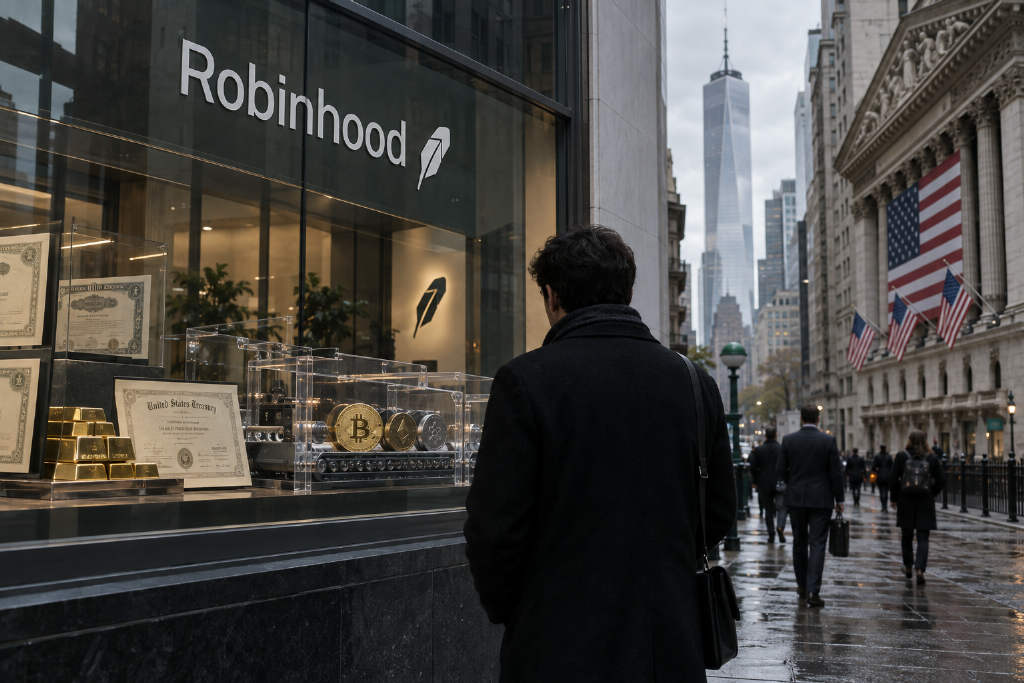
RWA2026-10-01 06:51:59How RWA Is Reframing the Case for Robinhood ChainA discussion hosted by Zhengming School and shared by HB laid out a broad framework for thinking about real-world assets, or RWA, and why Robinhood Chain has become a focal point in that conversation. The session argued that tokenized stocks, perpetual products tied to equities, and chain-based distribution rails are reshaping how crypto participants think about new assets and where those assets will trade. HB described RWA as a long-cycle shift in the financial system rather than a short-term narrative, and said its core value lies in distribution, programmable capital, and eventually a unified ledger structure rather than simple trading efficiency. The discussion also traced RWA through three stages, from asset managers putting Treasuries and ETFs onchain, to perpetual products on platforms such as Hyperliquid, and then to broker-integrated spot stock access that may not require token mapping at all. Speakers debated whether the recent divergence between BTC and QQQ is tied to RWA, how taxes and compliance could shape adoption, and why pre-IPO contracts and leveraged stock products may attract users who already have access to traditional brokerage accounts. A large part of the session focused on Robinhood Chain. Speakers said Robinhood is using chain infrastructure less to raise ARPU and more to solve for global distribution and user acquisition. They also discussed Robinhood’s strengths, including product execution and retail mindshare, as well as constraints tied to regulation, ecosystem depth, and international expansion. The conversation ended with views on Robinhood’s valuation, platform selection, and portfolio positioning under an RWA-driven market structure.50
Crypto Market2026-09-22 08:06:23Solstice CEO says crypto’s boom-and-bust cycles are losing force as liquidity deepensSolstice CEO Ben Nadareski said crypto markets are unlikely to revisit the extreme boom-and-bust patterns seen in earlier cycles, arguing that deeper liquidity and a larger institutional presence are changing how digital assets trade. In remarks on Cointelegraph’s Chain Reaction show, he said liquidity in major trading pairs has improved markedly, including during bear markets, reducing the setup that once led to sharp price swings. Nadareski also said crypto is becoming a market shaped more by institutional capital and household wealth than by pure speculation. Data cited in the report points in the same direction: a December 2025 study from Glassnode and Fasanara Digital said Bitcoin’s one-year realized volatility fell from 84.4% to 43%, while daily spot volume rose to $8 billion-$22 billion from $4 billion-$13 billion in the previous cycle. Nadareski also projected that stablecoins on Solana could grow from about $16 billion today to above $50 billion and toward $100 billion within five years, citing fintech adoption, transaction speed and low fees. CEX.IO data showed stablecoins made up 75% of total crypto trading volume in Q1 2026, with transaction volume topping $28 trillion.570
Bitcoin2026-09-21 15:45:35Bitcoin Returns to an Eight-Month High as Traders Look to the Next MoveBitcoin climbed as high as $86,332 on Monday, its highest level in eight months and the first time the market has seen that price since January. The move extended a rebound that began near $62,000 on August 17 and pushed BTC back above $80,000 within a month. Even after that run, Bitcoin remains more than 30% below its record above $126,000 from October 2025, while its year-to-date loss has narrowed to less than 3%. Liquidation data shows how much of the rally was driven by short positions getting wiped out. CoinGlass recorded $877.31 million in crypto liquidations over the past 24 hours, with $740.79 million, or about 84%, coming from shorts. More than 126,000 accounts were liquidated, and the largest single order was an $11.29 million BTC/USDT position on Binance. Bitcoin alone accounted for $491.48 million of the total, while Ethereum added $195.11 million. The article points to lower oil prices, a pullback in the 10-year Treasury yield toward 4.9%, and several major events over the next three weeks as key factors to watch. Those include a planned September 24 meeting in New York between Donald Trump and Xi Jinping, the Fed’s preferred inflation gauge on September 30, the September jobs report on October 2, and CPI data on October 14. Meanwhile, Myriad traders are pricing in 50% odds that Bitcoin reaches $90,000 by month-end and 28% odds that it touches $92,500.480
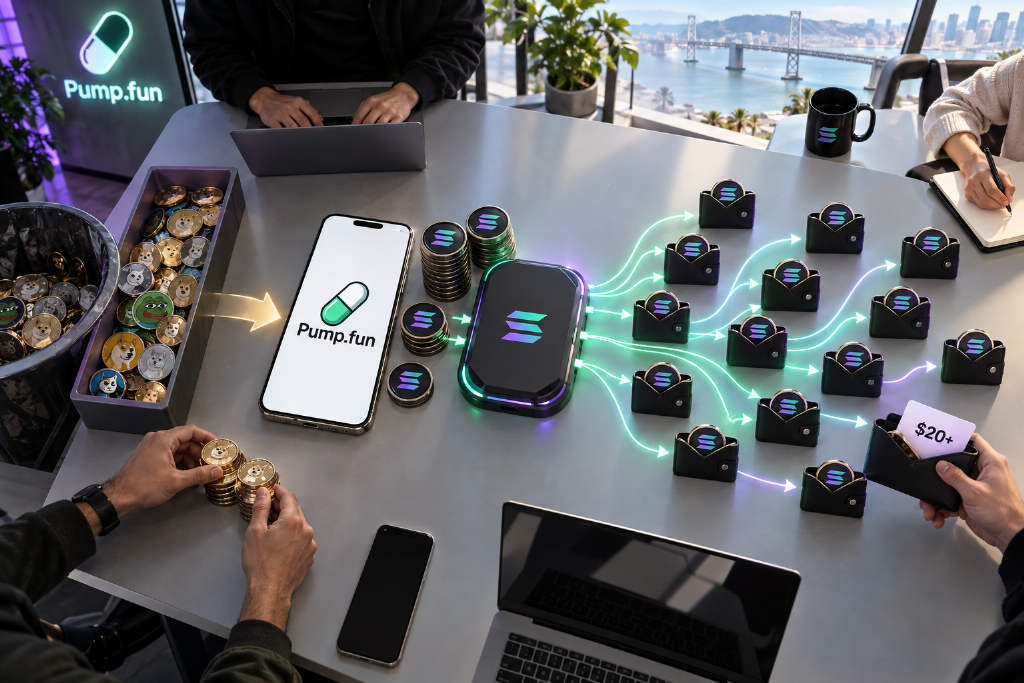
Pump.fun2026-09-14 15:14:09Pump.fun Removes Cashback for New Token Launches and Rolls Out Holder RewardsPump.fun has overhauled the fee-routing options available to new token launches, removing Cashback Mode and replacing it with a new Holder Rewards system. Under the updated setup, fees assigned to a Holder Rewards token are routed to a Pump.fun distribution wallet and then paid out automatically to eligible holders on a pro rata basis several times per hour. To qualify, a wallet must hold more than $20 worth of the token, and larger balances receive a larger share of the distribution. Unlike the previous Cashback model, which required users to claim rewards through Pump.fun, its app, or Terminal, the new payouts are automatic and arrive in the pair’s quote asset, such as SOL for a SOL pair or PUMP for a PUMP pair. The change also affects existing tokens, though they will not migrate automatically. Teams and communities behind Cashback and Creator Fee tokens can apply through Pump.fun’s fee-redirection form, while Custom Pair applicants must provide a new flat fee. Pump.fun said new launches can now choose only between a standard Creator Fee token and a Holder Rewards token, and any switch to Holder Rewards is permanent.910
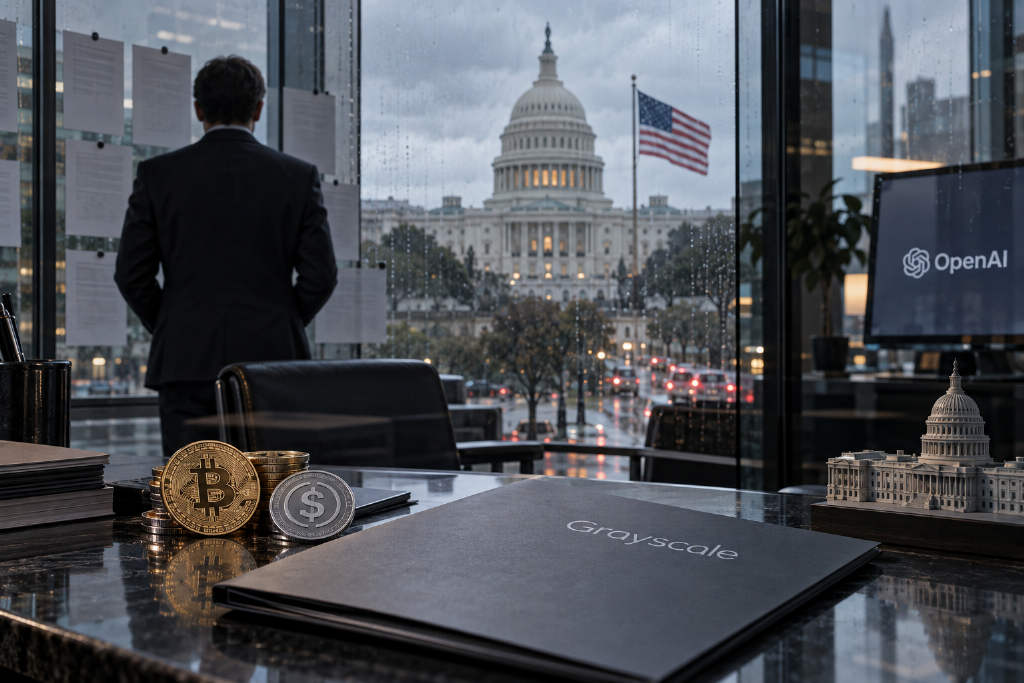
Policy and Re2026-09-14 02:18:25OpenAI Rules Out 2026 IPO as Grayscale Says U.S. Crypto Rules Can Advance Without CLARITY ActThe past 24 hours brought a dense mix of regulatory, market and infrastructure developments across crypto and adjacent tech sectors. Grayscale’s head of research, Zach Pandl, said U.S. crypto regulation can keep moving even if Congress fails to pass the CLARITY Act this year, pointing to progress already underway in stablecoins, token issuance, tokenized securities and perpetual futures. OpenAI CEO Sam Altman, meanwhile, said the company will not go public this year and that an IPO could slip to 2027, citing safety concerns and the company’s ongoing work on alignment and government cooperation. Elsewhere, Strategy published a fresh Bitcoin investor guide framing BTC as the foundation of an emerging digital capital market, while CoinShares argued hotter U.S. CPI data may cap near-term upside for Bitcoin even as failed Treasury buybacks could create a medium-term tailwind. South Korea’s digital asset basic law may be delayed into the first half of next year, Brazil’s new capital rules could force hundreds of exchanges to exit, and Chainflip disclosed a Tron USDT exploit that led to unauthorized payouts. Ripple, TRM Labs, Tom Lee, Jiang Zhuoer and others also added new data points on stablecoins, market structure, AI-linked macro risk and positioning.1110
Retail Tradin2026-09-14 00:00:00Tulip King argues retail trading could define the next 20 years of market structureA PANews article compiled from commentary by Tulip King frames the rise of retail trading as more than a reaction to economic stress or speculative desperation. The piece argues that what looks like chaos on the surface may actually be the turning point of a much longer cycle, one in which open networks, creator culture and crypto-native financial rails push individual participants closer to the center of global markets. To make that case, the article compares crypto with YouTube. Just as YouTube lowered the cost of publishing and distribution, allowing creators to challenge television, newsrooms, consumer brands and even Hollywood, crypto is described as doing something similar for trading and finance: always on, permissionless, global and cheap to access. The article points to Bitcoin, Zcash, stablecoins, Ethereum, Solana, Hyperliquid, prediction markets, perpetual futures and flash loans as signs that crypto has already built new monetary and market infrastructure. Tulip King also argues that the next stage may revolve around social trading. Streamers with visible track records, onchain performance data and creator-style distribution could shape how traders are followed, how capital is allocated and how talent is hired. Even so, the article does not claim everyone will make money. Its narrower point is that future market volume may become far more retail-driven, even if profits remain concentrated among the most skilled participants.970
Venice2026-09-09 13:28:52Venice’s VVV Hits a Record High After OpenAI Dispute Enters the SpotlightVenice’s VVV token surged after a public dispute involving OpenAI and an NYU mathematician put fresh attention on a question the project has been pushing since early 2025: whether private exchanges with AI systems could end up informing someone else’s work. Decrypt’s Morning Minute said VVV climbed 40% to $27 and also noted a 34% move to $24.77 on Tuesday as trading volume jumped sharply. The report framed Venice as an AI platform built around local privacy. Founded by ShapeShift creator Erik Voorhees, the project says prompts stay on a user’s device instead of company servers. It uses open-source models, has no content filters, and does not require an account. VVV is used as an access key tied to API inference capacity, while DIEM is minted by locking staked VVV and grants $1 in daily API credit in perpetuity. Decrypt’s newsletter also ran through a broad market snapshot: BTC rose 2% to $79.5k, ETH gained 2% to $2,510, SOL added 2% to $104, and ZEC climbed 9% to $1,264. The piece also covered ETF outflows, Strategy’s $176.3 million STRC buyback, Bitmine’s larger ETH position, rising Stonkfun revenue, Circle’s planned $400 million stock deal for Tazapay, and mostly flat NFT blue chips.990
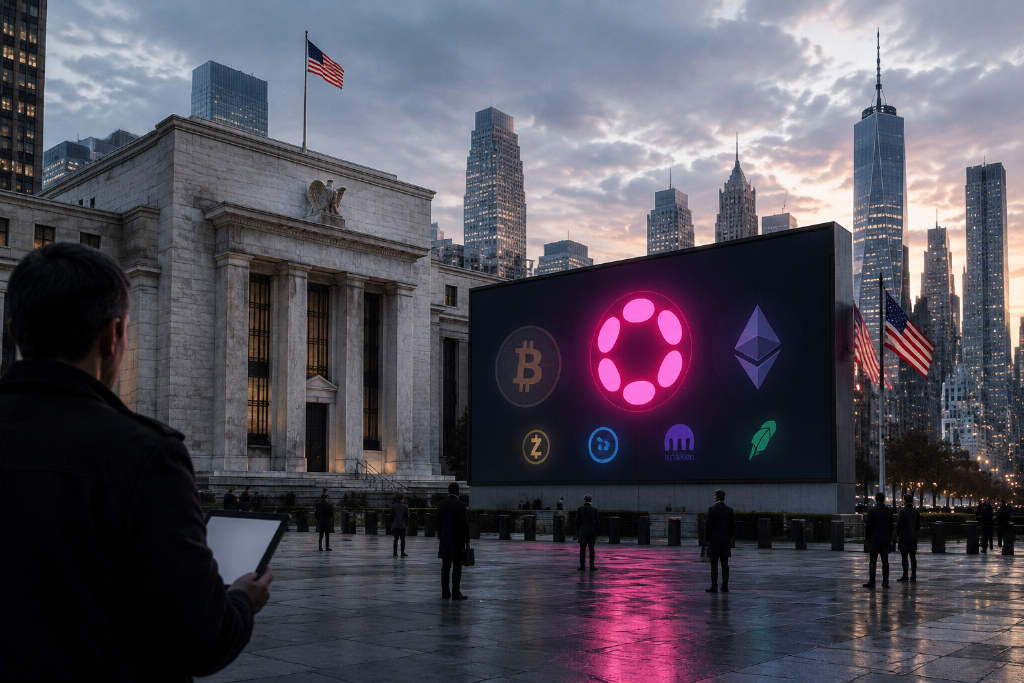
Polkadot2026-09-08 21:32:57Polkadot Leads a Rotation Into Older Layer-1 Tokens as Fed Hike Odds Reach 54.5%Older layer-1 tokens launched before 2018 led parts of the crypto market on Tuesday, with Polkadot rising 16.7% after a proposal to create the network’s native stablecoin, dotUSD, entered OpenGov. Bitcoin and ether finished lower as traders increased bets on a 25-basis-point Federal Reserve rate hike at next week’s meeting. Polymarket priced the hike at 54.5%, with $104.6 million in volume. Bitcoin traded at $78,539, down 0.83% over 24 hours but up 1.6% over seven days, while ether fell 0.29% to $2,484.83. Cosmos Hub, Decred and Ethereum Classic also advanced without a dated catalyst. Zcash gained 0.82% after Grayscale said its ZCSH fund was available for options trading on the NYSE, though no exchange notice or SEC filing confirming the listing was retrieved. Injective rose 5.25% following announcements tied to native USDC on Kraken, INJ trading on Robinhood and record on-chain staking. Useless Coin gained 24% after Bithumb and Upbit opened trading. Brent crude settled at $99.31 a barrel, while U.S. equities closed lower.1070